

 Posts
Posts


So as of around 11:44 today, autumn arrived here in the Northern Hemisphere. In Florida, the event is largely an academic one, largely unnoticed by the 99.99% of the population who don't actively follow astronomy. I'm excited that here in Pennsylvania it actually has significance; for one thing, it was a rather balmy 59 degrees and completely overcast as I was walking to class in the early afternoon, though it has since warmed up to right around 70. Much colder weather - including high's in the 50's - is supposed to arrive by the middle of next week. Joy. I am planning some type of trip to take full advantage of the beauty of the changing colors - perhaps to Vermont - sometime over the next month.
Today was largely uneventful. I slept in till' 10ish, did some reading and finished up an accounting assignment; this week looks relatively light in terms of work, as all I have left to complete is a Java assignment for Wednesday and a database homework due on Friday. Yay for a break in the unrelenting suffocation of work that is MISM...I'm definitely backing down to 60 units for next semester, and I'm more equally distributing those courses over the two mini's as opposed to heavily "front-loading" like this semester. Though in good news, as a result of that "front-loading" I'm only going to have one course per day every day except for Wednesday after October 16. Other plans include going on an Allies retreat this weekend - basically chilling with the LGBT undergrads at CMU, not sure where we're going - and closely following the first Obama-McCain debate this Friday. And speaking of Allies, probably going to a late half-price dinner thing with them tonight.
But enough of me and my going-on's. During the week I plan on using this blog to follow developments in various areas that I'm interested in. I thought about those and decided on the following format, which I shall religiously follow: (no kidding; once I establish a habit, I stick to it like an old man sticks to his routine):
Monday: Spotlight on Florida
Tuesday: Technology and Business
Wednesday: Politics and Society
Thursday: LGBT(QI?) Happenings
Friday: Explorations
Carnegie Mellon is a small private university with a well-established reputation in engineering and technology; according to this survey, CMU students rake in an impressive $61,800 median starting salary and even more commendable $111,000 median mid-career salary. By and large, CMU students go to work in high-tech fields; the types of jobs that are emblematic of the knowledge economy, the true economic future of the developed world.
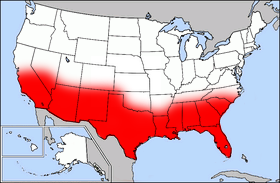
And speaking of the new knowledge economy, we all know what has happened continually to Northeastern and Midwestern capital and business over the last five decades; it has gradually but surely shifted south and west into the ambiguously defined "Sunbelt" (daring Wikipedia editors, however, have tried to approximate this nebulous region.) Warm climate (or at least not-freezing-cold-for-half-of-the-year) places like Los Angeles, San Francisco, Austin, Dallas, and Atlanta have seen veritable tech booms in their economies. Companies based in and around these cities were well-represented at the career fair here, as I discovered by doing some investigative research. But in my research, I also discovered a more disturbing fact (one that I first became aware of while an information sciences undergraduate at UF.) I did a query of the career database for CMU students based on jobs that I qualify for as an information systems major, filtered the result by a few Sunbelt states, and came up with the following:
| State | # of Jobs | Population (est. 2007) |
| California | 131 | 36,553,215 |
| Texas | 33 | 23,904,380 |
| Virginia | 39 | 7,712,091 |
| Georgia | 13 | 9,544,750 |
| Florida | 16 | 18,251,243 |
(I fully recognize that many people would argue that Virginia is too cold and too far to the north to classify as a Sunbelt state; regardless, its population growth and demographic shifts over the last 30 years are at least similar to the region's, and most of the state does technically have a subtropical climate. If it walks like a duck and quacks like a duck...)
This is rather interesting, and unfortunately I suspect that the same results would appear had I run this analysis on civil engineering jobs, on biomedical jobs, on nanotechnology jobs, on software engineering jobs - on basically any type of knowledge economy employment. As one might expect, California clearly dominates the nation in these types of jobs. But observe how Florida - with exactly half of California's population - could only offer me 12% of California's job opportunities in this example. In an equally disturbing comparison, Virginia - with less than half of Florida's population - has more than twice the number of available MIS job openings. Florida has a full 76% of Texas's population, but just under half of the MIS/IT job listings of that state. And on and on.
I saw the same thing many times while a UF undergraduate; literal hordes of my fellow classmates being hired for high-tech jobs in Washington state, in North Carolina, in California, in Texas, in Georgia - with precious few (myself being one of that precious few) landing an MIS-related job in the Sunshine State. Perhaps many of them simply wished to relocate elsewhere, but regardless, even if they did wish to stay in state, it appears that we would likely not have the economic capacity to accommodate them. And since the establishment of the Master of Information Systems Management (MISM) program here at CMU - my current degree program - next to none of our graduates have taken careers in Florida.
So just what gives here, and does it make a difference for techies in Florida? The answer to the last question is a resounding "yes":
| State | # of Jobs | Median Household Income |
| California | 131 | $ 56,645 |
| Texas | 33 | $ 44,922 |
| Virginia | 39 | $ 56,277 |
| Georgia | 13 | $ 46,832 |
| Florida | 16 | $ 45,625 |
Again, Florida finds itself second-to-last in this cohort of fellow high-growth, warm climate states, edging out only Texas - but actually slightly poorer than Georgia (!!). And these numbers are not even adjusted for cost of living; were those comparisons made, high-cost Florida (principally in terms of real estate costs) would almost certainly rank dead last. For a long time Florida was a "low cost, low wage" state, but that paradigm has fundamentally shifted since the 2001 - 2006 real estate boom; a typical middle class home in Miami can no longer be purchased for $200,000 - or even $300,000 in many of the more desirable areas. Affordably mortgaging a 3/2 single-family home in well-to-do areas like Wellington in Palm Beach County, Weston in Broward, or Pinecrest in Miami-Dade requires a solid six-figure income - and South Florida's low-tech economy is hardly replete with such six-figure, knowledge economy work.
Many factors are at play here, and a resolution will be complicated. I'm going to discuss these over the next few weeks, but today I'd like to briefly mention the education element by comparing Florida to California. (People often call Florida the "California of the Southeast." Hardly; as much pride as I have in my home state and as decidedly non-Southern as Florida may be, I have no qualms in admitting that Californians are light years ahead of us on a wide array of cultural and social issues.)
Put simply, Florida chronically underfunds education from the Pre - K to the PhD level; it is one of the biggest legislative disgraces of our state. In 2005-2006 figures from the Public Policy Institute of New York (table availabe here), California ranked 16th among states, spending $2,534 per capita on its total Pre - K through post-secondary educational system. Florida, meanwhile, ranked in at a disgracefully low 48th place - surpassing only Arizona and Tennessee (I might add, two other "low tax" bastions - I'll have more on Florida's pathetic tax situation next week) - and spending only $1,954 per capita on students. That kind of underinvestment has negative results across the board. Consider the following figures:
| State | BS/BA degree or higher (%) |
| California | 29.4 (rank: 13) |
| Florida | 25.4 (rank: 27) |
| State | MS/MA degree or higher (%) |
| California | 10.4 (rank: 15) |
| Florida | 9.1 (rank: 23) |
| Ranking – Public Universities |
| UCal – Berkeley (#1) – Cal. |
| UCal – Los Angeles (#3) – Cal. |
| UCal – San Diego (#7) – Cal. |
| UCal – Davis (#12) – Cal. |
| UCal – Irvine (#12) – Cal. |
| UCal – Santa Barbara (#12) - Cal |
| Univ. of Florida (#17) – Fla. |
| UCal – Riverside (#40) - Cal |
| UCal – Santa Cruz (#45) - Cal |
| Florida State Univ. (#50) – Fla. |
(The State University System of Florida has 10 other institutions, but none of them rank in the “First Tier” of public institutions in terms of quality. These include the University of North Florida, the University of Central Florida, the University of South Florida, and Florida Gulf Coast University, among others. They did not score high enough to even be ranked in the above survey.)
So even though there are many factors involved, perhaps the underlying reasons aren't all that complicated after all. The knowledge economy cannot function without highly educated knowledge workers, as well as the supportive environment that incubates their entreprenurial ventures. Florida - the low tax, pro-business paradise (no income tax! send us your rich and overtaxed, your millionaire retirees and overpaid CEOs!) - somehow fails to develop truly world class higher education institutions, lags much of the rest of the Sunbelt in salary, has no true high-tech industry base, and consequently does not attract these highly-educated workers as reflected in the education statistics. Instead, we remain a state of low-paying service jobs mainly in the tourism and hospitality industries.Changing that, of course, will require more than a larger investment in education - but that's certainly a good start. In fact, a South Florida Sun Sentinel article, in discussing efforts to diversity South Florida's economy by attracting more high tech, hit the nail on the head:
Still, Sean Snaith, an economist at the University of Central Florida, sees problems ahead for job growth statewide if Florida's business and political leaders don't change their attitude.
"We have this obsession with trying to be the lowest cost or cheapest, an anti-tax mentality," Snaith said. "But if we're not providing enough support, we may be shooting ourselves in the long run."
To attract new headquarters and executives who desire to move to the region, South Florida needs more than a pleasant climate.
"We need to continue to invest in infrastructure, highways and ports, airports, a better transportation system and educational system," Snaith said.


No comments:
Post a Comment